November 21, 2026 What Foreign Buyers Should Know About Mortgages in Japan

November 21, 2026 What Foreign Buyers Should Know About Mortgages in Japan
■ One word that shapes a lot of financial decisions in Filipino culture
In Tagalog, we have a word: sayang. It is difficult to translate exactly, but the closest equivalent in English is "what a waste" or "what a pity." You say it when something valuable is lost unnecessarily when food goes uneaten, when an opportunity is missed, when money is spent on something that could have been avoided.
I mention this because it comes up a lot in the way my family thinks about financial decisions. Paying more than you need to, for longer than necessary, when there was a better path available that is sayang.
■ Housing loans in Japan and what residency status has to do with it
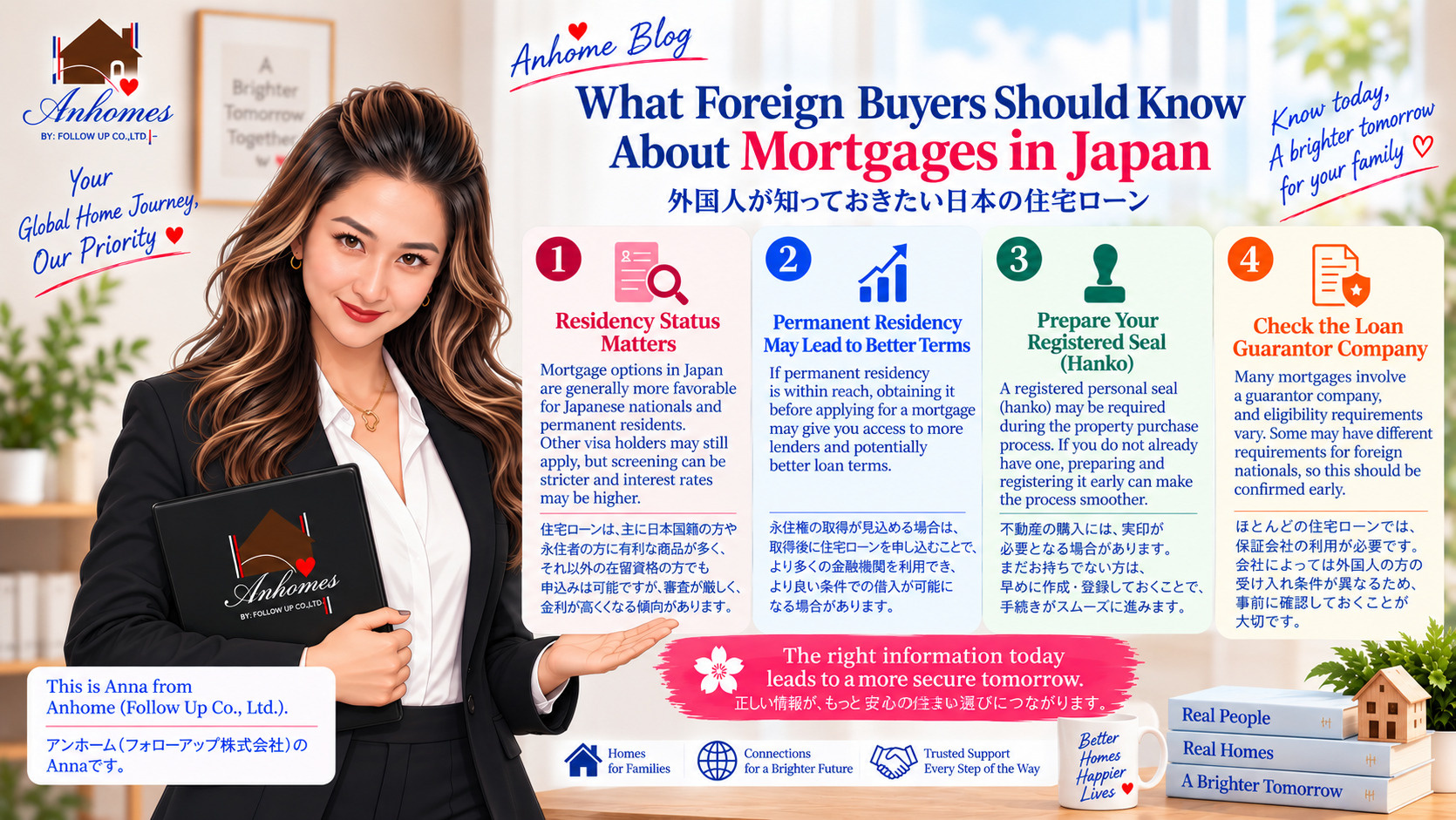
In my work supporting foreign clients through the property purchase process, the question of housing loans comes up early. The basic picture is this: mortgage products in Japan are designed primarily with Japanese nationals and permanent residents in mind.
That does not mean foreign nationals on other visa statuses cannot apply. They can. But the screening tends to be more rigorous, and the interest rates offered are generally higher. The factors that affect the outcome include how long you have been living in Japan, how long you have been with your current employer, and your income level.
■ The advice my family gives on this
My husband and I have talked about this with foreign clients and, in our own conversations, arrived at the same conclusion: if there is a realistic path to permanent residency, it is usually worth getting there before taking on a mortgage.
Paying a higher interest rate over the full term of a home loan sometimes fifteen or twenty years because the timing was not right adds up to a significant amount. Sayang. If permanent residency is achievable within a reasonable timeframe, the better financial outcome often comes from waiting for that status before committing to a loan on less favourable terms.
This is not a universal answer. Every person's situation is different their visa type, their timeline, their reasons for wanting to buy now. But it is a question worth sitting with before signing.
■ Other practical things that come up for foreign buyers
A few other things I see regularly in my work that are worth knowing in advance.
Hanko the personal seal used for official documents in Japan is something many foreign clients do not have when they first arrive. If you are planning to purchase a property, having a registered seal made is one of the early practical steps.
Loan guarantor companies, which are required as part of most mortgage arrangements, do not all accept foreign nationals. There are companies that do, and the situation varies depending on the specific mortgage and property involved. This is worth confirming early in the process rather than encountering it mid-application.
■ Knowing where you stand makes the decision clearer
The theme running through a lot of what I try to help foreign clients understand is this: knowing your situation your residency status, your documentation, the terms available to you before you start searching changes the quality of the search. You are not discovering the constraints partway through. You know them in advance and can plan around them.
If you are a global family thinking about buying a home in Japan and not sure where your current situation puts you, that is exactly the kind of question I am here to help you think through.
■ Get in touch
I can help you understand the landscape before you start including the parts that look different for foreign buyers. Reach out any time.
Phone: 072-489-5661
— Anna
Anhome (Follow-Up Inc.)